How much protein do you really need?
Why most active adults do well on 1.6–2.2 g per kg, and how to spread it across the day.
[Author name, credentials] · [Date] · Reviewed by [registered dietitian]
Protein keeps you full, protects muscle as you age or lose weight, and helps you recover from exercise. But the right amount depends on who you are and what you do.
The short answer
The official minimum for healthy adults is 0.8 g of protein per kg of body weight per day. That prevents deficiency, but many people do better with more, especially if they exercise, are trying to lose weight, or are over 65.
| Who | Per kg body weight / day | For a 70 kg person |
|---|---|---|
| Most adults, little exercise | 0.8 g | ~55 g |
| Regular exercise | 1.2–1.6 g | 84–112 g |
| Building muscle | 1.6–2.2 g | 112–154 g |
| Losing weight (keep muscle) | 1.6–2.0 g | 112–140 g |
| Adults over 65 | 1.0–1.2 g | 70–84 g |
| Pregnancy (2nd & 3rd trimester) | ~1.1 g | ~77 g |
Spread it through the day
Your body uses protein best in steady doses. Aim for roughly 20–40 g at each meal rather than one big serving at dinner. Breakfast is where most people fall short.
Easy ways to get 25 g
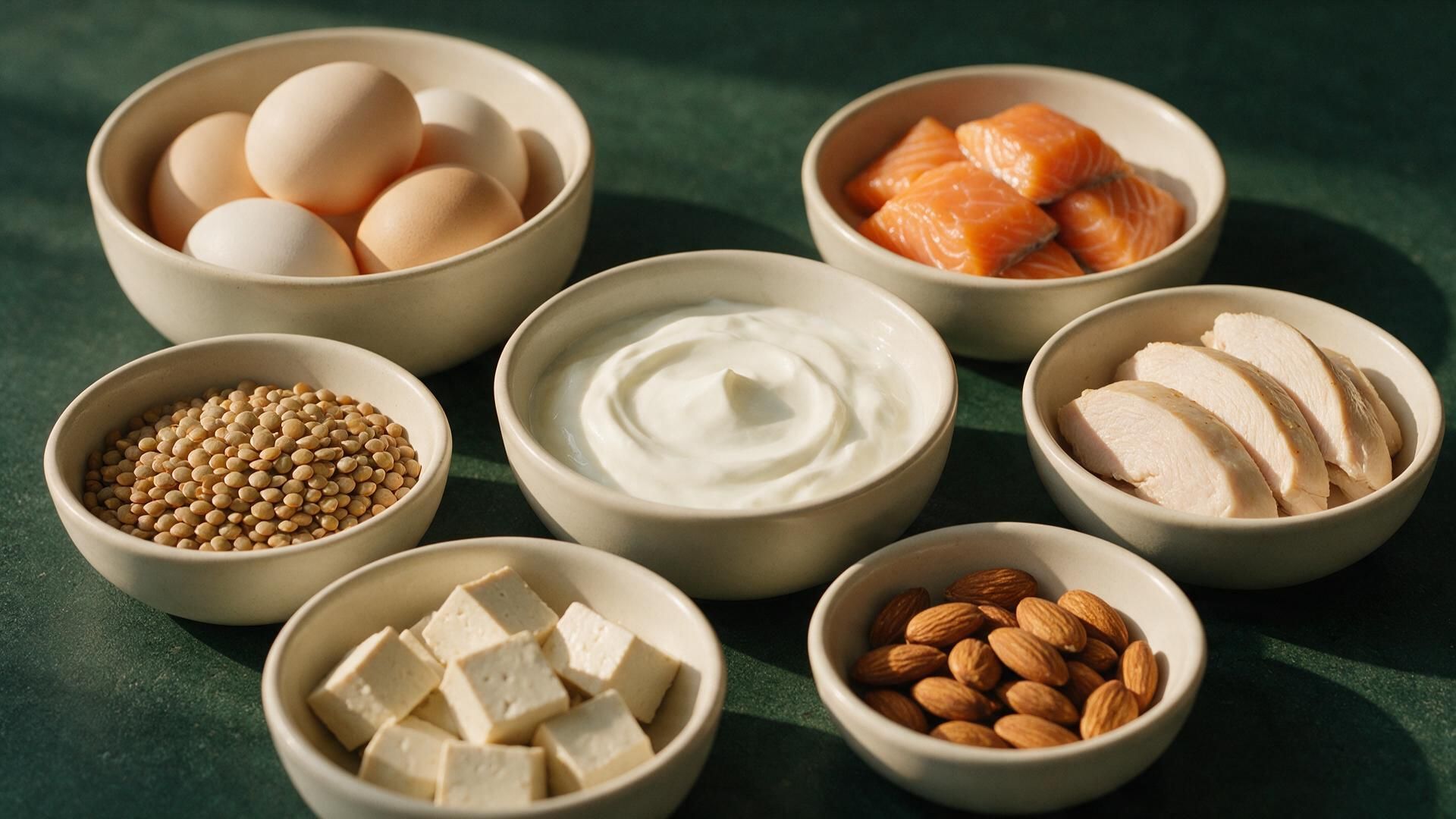
- A 170 g pot of Greek yogurt (17 g) with a handful of almonds (6 g)
- Three eggs (19 g) on a slice of wholemeal toast (4 g)
- 100 g of chicken breast (31 g)
- 150 g of firm tofu (25 g)
- A cup of cooked lentils (18 g) with a little cheese (7 g)
Do you need protein shakes?
No. Shakes are convenient, but whole foods also bring fiber, vitamins and minerals. Use a shake if it helps you hit your target on busy days.
If you have kidney disease, or your doctor has asked you to limit protein, follow their advice.
General information, not medical advice. Check with a healthcare professional about your own situation.